21 November 2026 - Written by M.J Schermer:
Welcome to another monthly report from EUAINews, your daily source for EU-AI News via LinkedIn or Reddit and your monthly source to quickly catch up on all things EU-AI.
Let's start with the biggest foundational EU-AI movers:
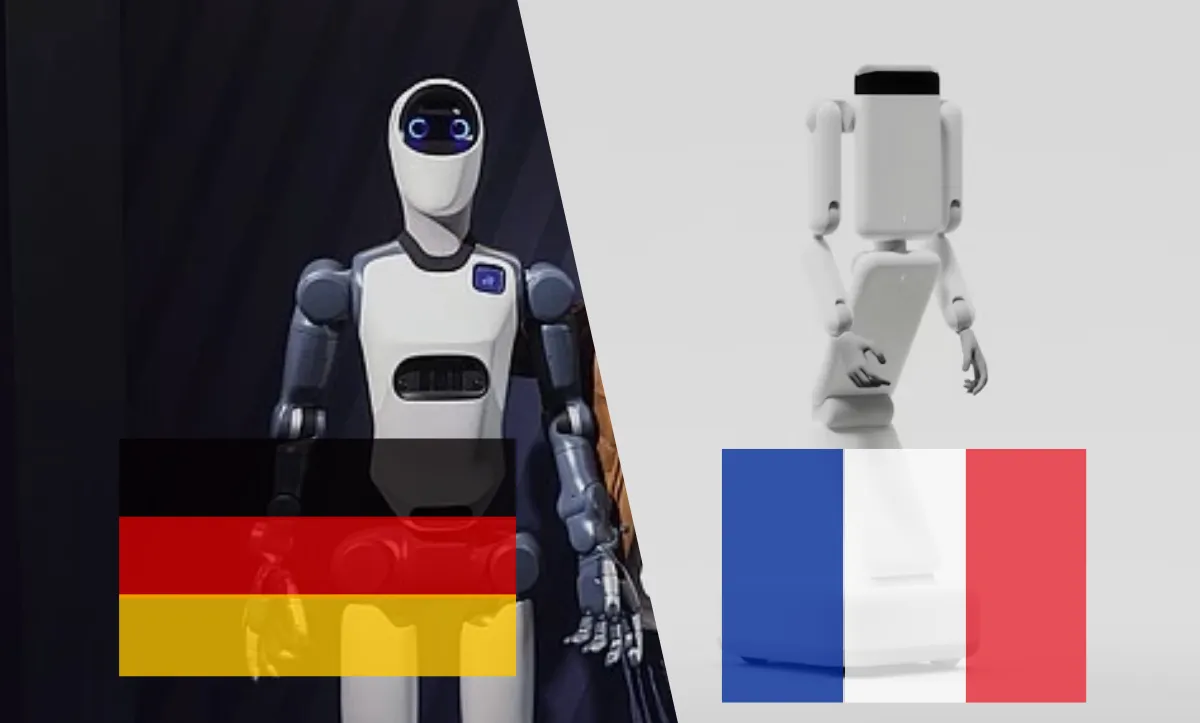
Figure 1: Agile One by Agile Robots on the left. Eno by Genesis AI on the right.
"For decades, automation meant machines repeating fixed sequences. Reliable, but unable to adapt. Physical AI changes that. " – Agile Robot
The main idea of physical AI is to move beyond fixed, repeatable workflows (automation) and instead have robots adapt on the go, all while keeping things reliable, valuable and safe for real-world deployment.
Both Agile One SE and Genesis AI SAS have a similar goal: To create general-purpose robots for work. Their main difference is their stage. Agile Robots raised $500M at series F (they released their first robot Diana 7 in 2019) while Genesis AI raised $500M at series A (first out of stealth in 2025).
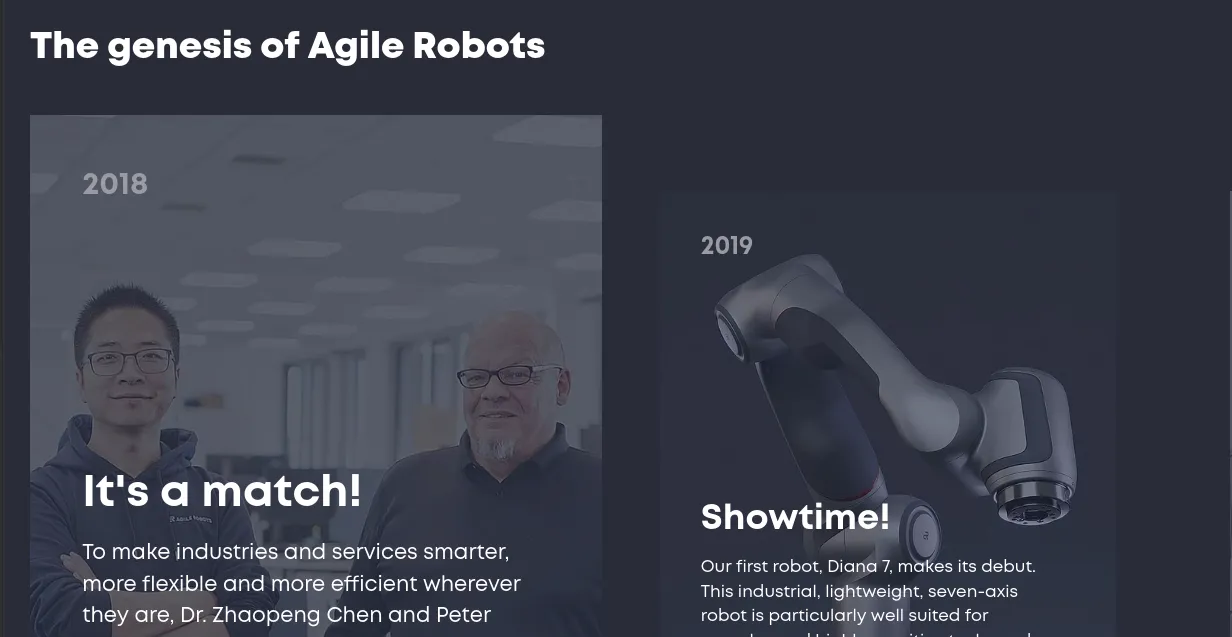
Figure 2: Agile One released their first robot Diana 7 in 2019
Domyn is currently testing their new 1T Mixture-of-Experts LLM model that has about 1T parameters, which is impressive because they joined the AI race much later than Mistral.
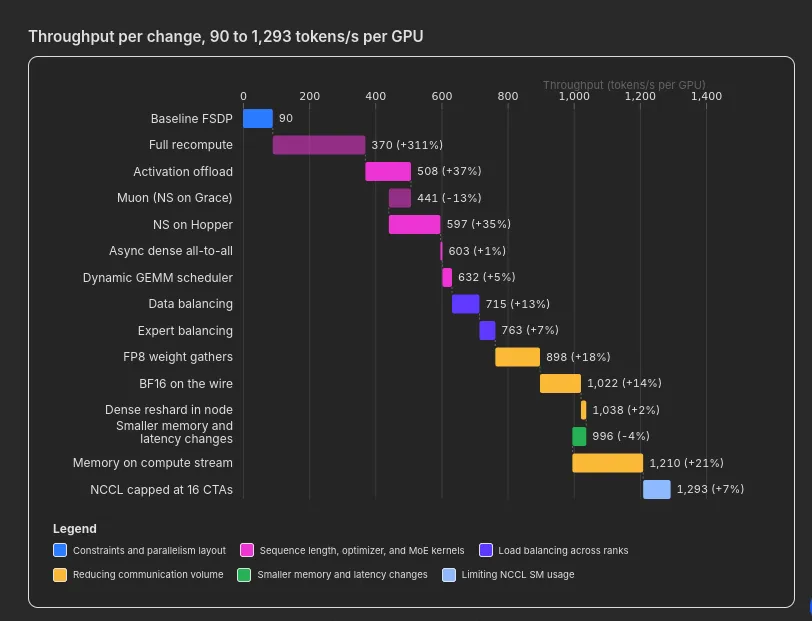
Figure 3: Cumulative impact of Domyn's engineering decisions from Domyn's technical blog post.
What's special about Domyn's approach is that they used Europe's publicly funded existing JUPITER supercomputer. They also heavily optimized their model for performance in terms of tokens/s per GPU.
For now it's unclear if this exact model will be open-source, however in June 2026 Domyn announced that they would release a new 400B+ parameter open-source frontier AI model, so it seems we can definitely expect a large open-source model from Domyn soon.
"Start caring about your staff and customers again. Don't be a bully" - Proton Customer
After 404media leaked the internal "loser thinking" AI manifesto of Proton, a wave of cancellations and heavy resistance emerged.
In one sentence, Proton’s AI “loser thinking” manifesto was this:
“Manually writing and reviewing code is for losers.”
So why did many customers cancel their subscriptions after reading that?
Because their customers were not looking for more new features fast.
And their customers certaintly were not looking for an extreme AI software development strategy that doesn't deal with the privacy & cybersecurity risks of removing real human oversight.
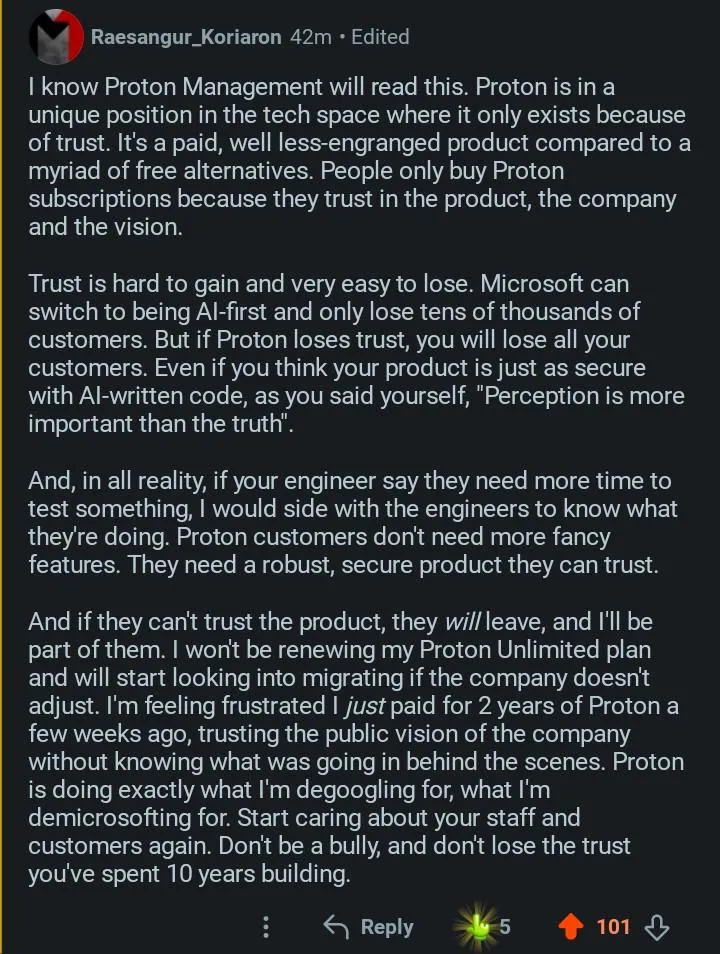
Figure 4: Proton Customer feedback via Reddit
Brave, the web search provider behind Mistral, got sued by The New York Times + a group of other publishers for providing "stolen copyrighted content" for many AI companies.
Among other violations, Brave seems to specifically bypass paywalls.
Brave keeps it's own index, and when specifically using the "answers" or "Ask Brave" feature, it seem that Brave also "grounds" the answer in content that may be behind a paywall.
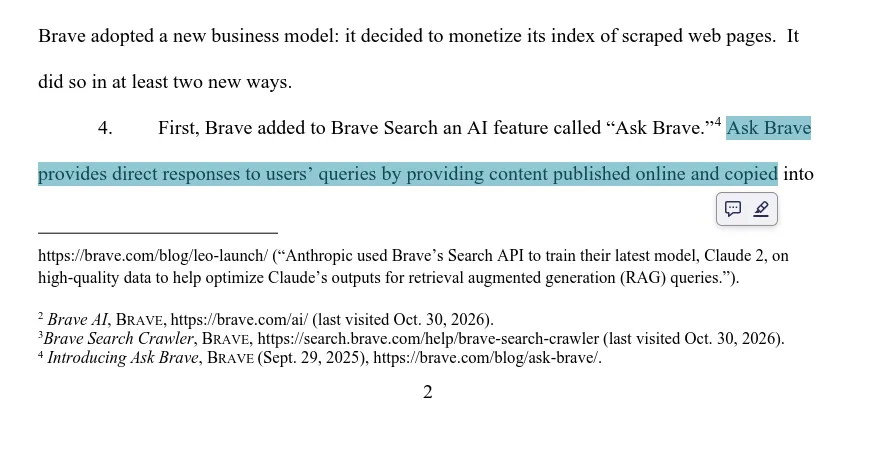
Figure 5: Snippet From PDF The New York Times v. Brave